6 Secrets to Generating Wealth for the Next Generation

Financial hardships can feel daunting at any stage of life, but they shouldn’t stop you from securing a prosperous future for the next generation. Building generational wealth ensures your loved ones can navigate life without constant financial stress. In this blog, we explore six actionable steps you can take today to establish a lasting legacy and protect your family’s financial future.

1. Invest Your Money Consistently

Investing is a proven catalyst for long-term wealth creation. Letting capital compound in growth-oriented instruments like equity mutual funds allows modest sums to multiply significantly over decades. Overcoming the misconception that investing is too complex is the first step; anyone can build a secure portfolio with the right information and a disciplined plan.

Learn more about wealth creation by connecting with us. 

2. Diversify Your Investments

Spreading your capital across diverse asset classes—such as equities, mutual funds, bonds, and real estate—mitigates portfolio risk. Diversification ensures that if one sector faces a downturn, strong performers elsewhere keep your wealth-building engine moving forward.

3.Utilize Tax-Advantaged Savings and Retirement Accounts

Leveraging structured savings vehicles or tax-advantaged accounts allows your capital to grow shielded from heavy taxation. Contributing regularly to retirement or long-term growth funds ensures that your loved ones inherit a clean, tax-efficient financial cushion.

4. Establish a Dedicated Savings Fund

Automating your savings removes friction and temptation. Setting up a dedicated fund where a fixed amount is funneled every month guarantees steady capital accumulation for future milestones like higher education, home purchases, or retirement.

5. Teach Essential Financial Literacy Skills

True generational wealth is sustained when the next generation knows how to manage it. Educating your loved ones on budgeting, credit scores, debt management, and the eroding impact of inflation is just as important as handing down monetary assets. Practical financial literacy prevents capital dissipation.

6. Build Multiple Income Streams Beyond a Paycheck

Relying solely on a single salary limits your financial velocity. Encouraging side businesses, freelancing, or digital ventures generates secondary income streams. Creating supplementary revenue accelerates your savings rate and builds long-term resilience against economic shifts.

Conclusion

Overcoming financial hurdles requires deliberate planning and consistent execution. By investing wisely, diversifying your holdings, automating your savings, and teaching financial literacy, you can create a powerful legacy for the next generation. Take control of your financial architecture today to ensure your loved ones enjoy true independence and security tomorrow.

Note: Mutual Fund investments are subject to market risks; read all scheme-related documents carefully. 

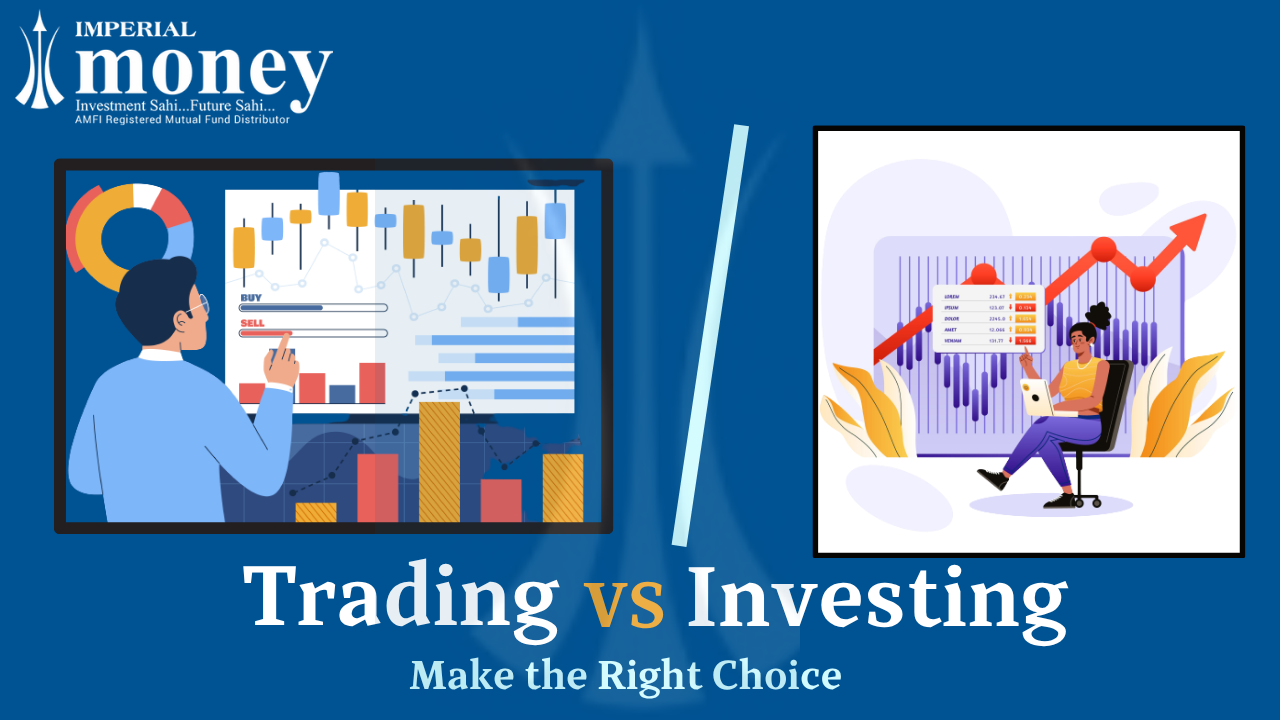
Trading vs Investing: Understanding the Key Differences

Trading and investing are two of the most popular ways to participate in financial markets, but they represent entirely different philosophies. Understanding the core distinctions between trading and investing is crucial for anyone looking to navigate the stock market effectively and align their financial activities with their personal goals.

1. Defining Trading and Investing

  • Trading: Trading refers to the frequent buying and selling of securities—such as stocks, bonds, or derivatives—with the objective of generating short-term profits. Traders rely heavily on technical analysis, chart patterns, and short-term market momentum. It is an active, fast-paced approach that requires constant market monitoring.
    Take control of your finances with the click of a button—download the Imperial Money App.
  • Investing: Investing is a long-term wealth-building strategy. Investors purchase quality securities with the expectation of holding them over extended periods, allowing capital appreciation and the power of compounding to work. Investors typically rely on fundamental analysis (studying business models, earnings, and economic moats) and maintain a patient, passive posture.

2. Key Differences Between Trading and Investing

  • Time Horizon: Trading focuses on short-term price swings (minutes, days, or weeks), whereas investing targets long-term horizons (years or decades).
  • Risk Profile: Trading carries higher risk due to high exposure to short-term market volatility and leverage. Investing is generally steadier, mitigating short-term noise through long-term holding.
  • Skill and Knowledge Requirement: Trading demands advanced technical skills, deep market familiarity, and rigid emotional discipline. Investing can be successfully practiced by anyone with a fundamental understanding of asset allocation and patience.
  • Time Commitment: Trading requires constant screen time and rapid decision-making. Investing allows a more passive lifestyle, requiring only periodic portfolio reviews.

3.Popular Strategies in Both Worlds

  •  Trading Strategies: Day trading, swing trading, and momentum trading—each requiring intense focus, strict stop-loss rules, and high risk tolerance.
  •  Investing Strategies: Value investing, growth investing, and systematic wealth accumulation through mutual funds—focusing on thorough research and disciplined execution.

Conclusion

Ultimately, choosing between trading and investing comes down to your personal financial goals, risk tolerance, and available time horizon. If you seek quick gains and can stomach high volatility, trading may appeal to you. However, if your objective is sustainable, long-term wealth creation with a structured, peace-of-mind approach, investing is the superior option. Both paths require discipline, patience, and a well-defined strategy.
Note: Mutual Fund investments are subject to market risks; read all scheme-related documents carefully.
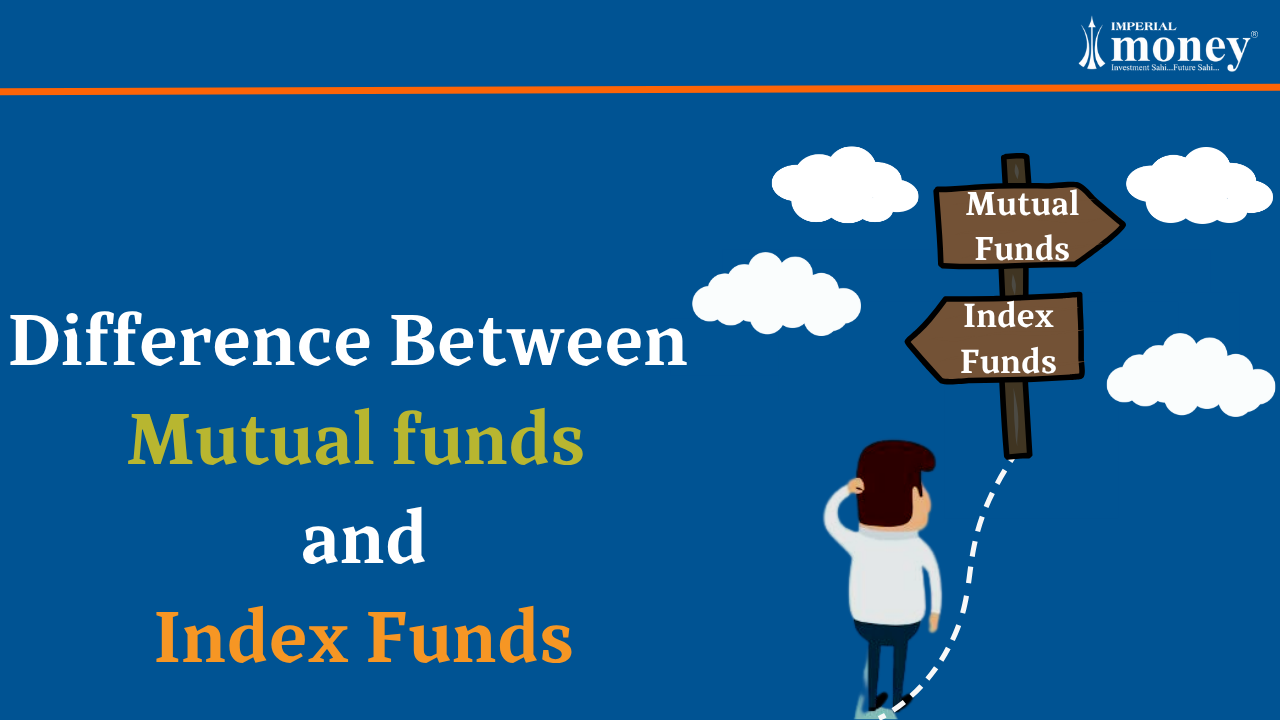
Mutual Funds or Index Funds: Understanding the Fundamental Differences

Investing in the stock market has become an essential part of long-term wealth creation. While there are many ways to participate in the markets, mutual funds and index funds remain two of the most popular choices for investors. Both vehicles offer distinct advantages and drawbacks. In this article, we explore the fundamental differences between actively managed mutual funds and passively managed index funds, helping you determine which vehicle best fits your financial strategy.

1. What is a Mutual Fund?

A mutual fund pools money from various investors to purchase a diverse range of stocks, bonds, or other securities. Mutual funds are actively managed by professional fund managers who leverage research and market analysis to buy and sell securities with the objective of outperforming benchmark indices.

a.) Key Characteristics of Mutual Funds:

  • Diversification: Spreads capital across various securities to minimize individual stock risk.
  • Professional Management: Managed by financial experts dedicated to optimizing asset allocation..
  • High Liquidity: Units can be bought or redeemed on any business day.
  • Low Entry Barriers: Allows investors to start building a portfolio with modest initial sums via Systematic Investment Plans (SIPs).

 b.) Pros & Cons of Mutual Funds

  • Pros: Professional oversight, potential for market-beating returns (alpha), built-in diversification, flexibility, and tax advantages.
  • Cons:  Higher expense ratios compared to passive funds due to active management overhead, though they remain significantly less volatile and risky than direct equity trading.

    Invest smarter, faster, and easier with the Imperial Money App

2. What is an Index Fund?

An index fund is a specialized type of mutual fund that tracks a specific market index, such as the NIFTY 50, NIFTY Next 50, or thematic sector indices. The core objective of an index fund is to replicate the performance of the underlying index rather than beat it. Index funds are passively managed, meaning they do not require active stock-picking by a fund manager.

a.) Pros & Cons of Index Funds:

  • Pros:  Lower expense ratios, minimal portfolio turnover, high tax efficiency, and broad market representation.
  • Cons: Inability to outperform the index, lack of tactical flexibility during market downturns, and rigid exposure to underperforming sectors within the benchmark.

3. Major Differences Between Index Funds and Mutual Funds

  • Management Style: Traditional mutual funds are actively managed to generate alpha, whereas index funds are passively managed to match benchmark returns.
  • Fees and Expenses: Index funds generally charge lower expense ratios because they require minimal active trading and research.
  • Diversification Depth: While both offer diversification, active managers can concentrate holdings on high-conviction ideas, whereas index funds mirror entire baskets strictly by weight.
  • Performance Potential: Actively managed funds aim to outperform the market (especially in inefficient segments like small caps), while index funds match it minus tracking errors.
  • Flexibility: Mutual funds provide tactical adjustments based on valuations, whereas index funds remain rigidly tied to their benchmark rules.

4. Choosing Between Index Funds and Mutual Funds

The decision to invest in an index fund or an active mutual fund depends on your investment objectives and market segment:

    • For Large-Caps: When investing in large-cap or established blue-chip segments where markets are efficient, low-cost index funds are a compelling option.
    • For Small, Mid-Cap, & Sectoral Plays: When looking to exploit valuation gaps, dynamic business opportunities, or emerging small- and mid-cap segments—where growth potential is immense, and indexes often miss dynamic business models—actively managed mutual funds are far more relevant.

Conclusion

Both index funds and mutual funds are excellent investment vehicles offering unique structural benefits. Choosing between the two depends on your personal financial goals, risk tolerance, and investment style. For tailored asset allocation that blends the stability of large-cap indexing with the alpha generation of active management, consult with our expert advisors at Imperial Money.

Note: Mutual Fund investments are subject to market risks; read all scheme-related documents carefully.

5 Investment Lessons from Warren Buffett

Warren Buffett is widely regarded as one of the most successful investors of all time, turning a modest start into a legendary fortune through a disciplined value-investing philosophy. Value investing centers on buying quality businesses trading below their intrinsic value. Over decades, Buffett has shared invaluable wisdom; here are five of his most critical investment lessons adapted for long-term success.

1.Invest in What You Know

Buffett is a firm believer in sticking to businesses you thoroughly understand. If you cannot comprehend how a company makes money or operates within its industry, you shouldn’t invest in it. Clarity prevents costly mistakes driven by market hype.

2. Buy Good Companies at a Fair Price

Quality matters, but so does valuation. Buffett emphasizes acquiring well-managed companies with strong competitive moats and consistent profitability—but only at a fair, rational price. Overpaying for an exceptional business severely curtails future returns.

3. Exercise Absolute Patience

Short-term market volatility is inevitable. Buffett stresses the importance of staying calm and never selling sound investments simply because the market is down. Selling during a downturn locks in temporary losses rather than allowing assets to recover and compound.

4. Diversify Your Portfolio

Never put all your eggs in one basket. Spreading your investments across various high-quality companies and asset classes protects your portfolio from the catastrophic failure of any single holding.

5. Reinvest Your Earnings

When your investments generate dividends or capital gains, resist the urge to spend them immediately. Reinvesting those returns back into your portfolio unlocks the full exponential power of compounding over time.

Additional Timeless Rules for Smart Investing

  • Never Try to Time the Market: Consistently predicting short-term market inflection points is a fool’s errand. Focus on business fundamentals and long-term holding periods instead.
  • Avoid Panic Selling: Market downturns test emotional resolve, but keeping a cool head ensures you stay aligned with your long-term goals.
  • Seek Professional Guidance: If managing a robust portfolio independently feels overwhelming, consult a trusted financial advisor to build a customized, process-driven wealth plan.

Conclusion

Warren Buffett’s enduring wisdom proves that investing is a long-term game built on discipline, patience, and rational decision-making. By following these core principles, you can navigate market cycles with confidence and steadily achieve your financial goals. 

Note: Mutual Fund investments are subject to market risks; read all scheme-related documents carefully.

Daily vs Weekly vs Monthly SIP: Which Frequency is Best for Your Investments

When investing in mutual funds through Systematic Investment Plans (SIPs) in the Indian market, individuals have the flexibility to choose different frequencies: daily, weekly, or monthly. Each frequency offers distinct operational advantages and drawbacks. In this blog, we delve into the pros and cons of each SIP frequency to help you align your choice with your personal financial workflow.

1. Daily SIP

A daily SIP involves investing a fixed amount of money every trading day. 

  • Advantages: Maximizes rupee-cost averaging by capturing micro-fluctuations in the market; builds a rigorous daily savings discipline.
  •  Disadvantages: Can create complex bank mandate tracking; demands continuous oversight of Net Asset Values (NAVs) and carries potential administrative friction.

2. Weekly SIP

A weekly SIP splits contributions into once-a-week installments, providing a middle-ground cadence.

  • Advantages: Reduces transaction friction compared to daily setups while offering regular participation and manageable scheduling.
  • Disadvantages: Offers fewer price-averaging points than daily options, potentially locking investments into weekly market peaks

3. Monthly SIP

The monthly SIP is the most popular, efficient, and widely adopted frequency across the Indian mutual fund industry.

a.) Advantages:

  • Simplicity & Budgeting: Aligns seamlessly with monthly salaried income cycles, preventing cash-flow strain.
  • Cost-Effectiveness: Incurs minimal administrative processing overhead.
  • Accessibility: Highly accessible for retail investors starting with modest sums
  • Mitigated Market Timing Risk:  Replaces emotional lump-sum investing with a steady, long-term systematic approach.

     b.) Disadvantages:

    less frequent market entry means missing intra-month market dips, and longer intervals can occasionally provoke short-term emotional reactions during severe market swings.

Conclusion

Choosing the appropriate SIP frequency depends entirely on your cash-flow structure, personal preferences, and investment discipline. While daily SIPs offer hyper-averaging and monthly SIPs provide ultimate budgeting convenience, the underlying key to wealth creation remains consistency. Evaluate your financial goals carefully, and connect with our experts at Imperial Money to set up the ideal structure for your portfolio.

Note: Mutual Fund investments are subject to market risks, read all scheme-related documents carefully.

Small Cap, Mid Cap or Large Cap: Which Mutual Fund is Right for You?

When it comes to investing in mutual funds, market capitalization categories serve as the primary framework for building a balanced portfolio. Broadly classified into small-cap, mid-cap, and large-cap funds, each category carries a unique risk-and-return profile aligned with specific investor profiles. Understanding these distinctions is vital before committing your capital.

1. Understanding Market Capitalization Categories

a.  Small-Cap Funds

  • Market Capitalization: Companies ranked below the top 250 (typically smaller enterprises).
  •  Risk Profile: High
  •  Return Potential: High
  •  Suitability: Aggressive investors with a long-term horizon willing to tolerate high volatility for exponential growth.

    Small-cap funds invest in relatively young, emerging companies. While subject to sharper market drawdowns, they possess substantial runway for rapid expansion.

b. Mid-Cap Funds:

  • Market Capitalization: Companies ranked between 101 and 250 by market cap.
  •  Risk Profile: Moderate to High
  • Return Potential: Strong/Attractive
  • Suitability: Investors seeking a powerful balance of accelerated growth and moderate risk.

    Mid-cap funds target growing companies transitioning toward industry leadership. They offer robust growth potential without the extreme fragility of micro-caps.

     C) Large-Cap Funds

  • Market Capitalization: The top 100 well-established blue-chip companies.
  • Risk Profile: Low to Moderate
  • Return Potential: Steady and Stable
  • Suitability: Conservative or moderate investors looking for relative stability and consistent compounding.

    Large-cap funds invest in industry giants with proven historical resilience, offering capital protection during market corrections.

2. How to Choose the Right Mutual Fund Category

Selecting the correct fund category depends heavily on your personal financial circumstances:

  • Risk Tolerance: Conservative investors should lean toward large caps, whereas aggressive portfolios can accommodate higher small-cap allocations.
  • Investment Time Horizon:  Long-term horizons (5 to 10+ years) absorb small- and mid-cap volatility far better than short-term windows.
  • Core Financial Objectives: Wealth creation goals favor equity growth, while capital preservation requires debt or large-cap stability.

3.Additional Factors to Evaluate

  • Performance History: Review 3-to-5-year rolling returns across different market cycles.
  •  Expense Ratios: Understand the management fees charged by the fund house.
  •  Investment Strategy & Mandate: Ensure the fund manager’s philosophy matches your long-term objectives.

Conclusion

Choosing the right type of mutual fund is a cornerstone decision for your financial health. By carefully weighing your risk tolerance, time horizon, and specific goals, you can construct an optimal asset allocation. If you are unsure where to begin, connect with our professional advisors at Imperial Money to receive tailored guidance mapped to your exact requirements.

Note: Mutual Fund investments are subject to market risks, read all scheme-related documents carefully.

Mastering Emotions: The Key to Long-Term Stock Investing Success

Investing in stocks can be a rewarding endeavor, but it is rarely without psychological challenges. One of the biggest hurdles investors face is managing their emotions. The stock market is known for its inherent volatility, and powerful feelings like fear and greed can lead to impulsive decisions that severely harm long-term wealth creation. In this blog, we explore actionable strategies to help you keep your emotions in check while building a secure financial future.

1. Set Clear Financial Goals

Before allocating a single rupee, clearly define your objectives. Whether you are saving for retirement, buying a home, or funding your child’s higher education, having concrete goals provides a sense of purpose and keeps you focused on the long horizon.

2. Diversify Your Portfolio

Diversification is a cornerstone risk-management strategy. Spreading your capital across different asset classes, sectors, and market caps reduces the impact of individual stock volatility, preventing you from investing all your emotional energy into a single company’s performance.

3.Conduct Thorough Research

Knowledge is power. Conduct deep research into the businesses you back—studying their fundamentals, financial health, and growth prospects. Grounding your investments in facts builds long-term conviction and diminishes the fear of making poor choices.

4. Formulate a Solid Investment Strategy

Develop a well-defined investment plan and stick to it rigidly. Whether your approach centers on value investing, growth stocks, or disciplined Systematic Investment Plans (SIPs), having a documented framework prevents emotional knee-jerk reactions.

5. Set Realistic Expectations

Stock market returns are never linear, and short-term volatility is completely normal. Set realistic expectations and accept that market corrections are part of the journey. Avoid chasing get-rich-quick gains or panicking when red numbers flash on your screen.

6. Create an Investment Timeline

Establish a clear timeline aligned with your financial milestones. Understanding that daily market fluctuations are merely short-term noise helps you ride out market turbulence with patience and steady resolve.

7. Monitor Without Obsessing

While staying informed is important, avoid obsessively checking portfolio values every day. Constant tracking induces unnecessary stress, anxiety, and emotional decision-making.

8. Filter Out Financial Noise

The modern financial media thrives on sensationalism and headlines. Focus on credible economic reports, avoid panic-driven chatrooms, and remember that long-term strategies should never be swayed by daily news cycles.

9. Seek Professional Guidance

If managing market stress or balancing a complex portfolio becomes overwhelming, consulting an experienced financial advisor provides objective clarity, ensuring your decisions remain rational and grounded.

Conclusion

Mastering your emotions while investing is just as important as picking the right assets. By setting clear goals, diversifying, conducting research, and relying on structured plans, you can minimize emotional interference and stay firmly on track. Remember that wealth accumulation is a marathon, not a sprint, and patience remains the ultimate key to success.

Note: Mutual Fund investments are subject to market risks; read all scheme-related documents carefully.

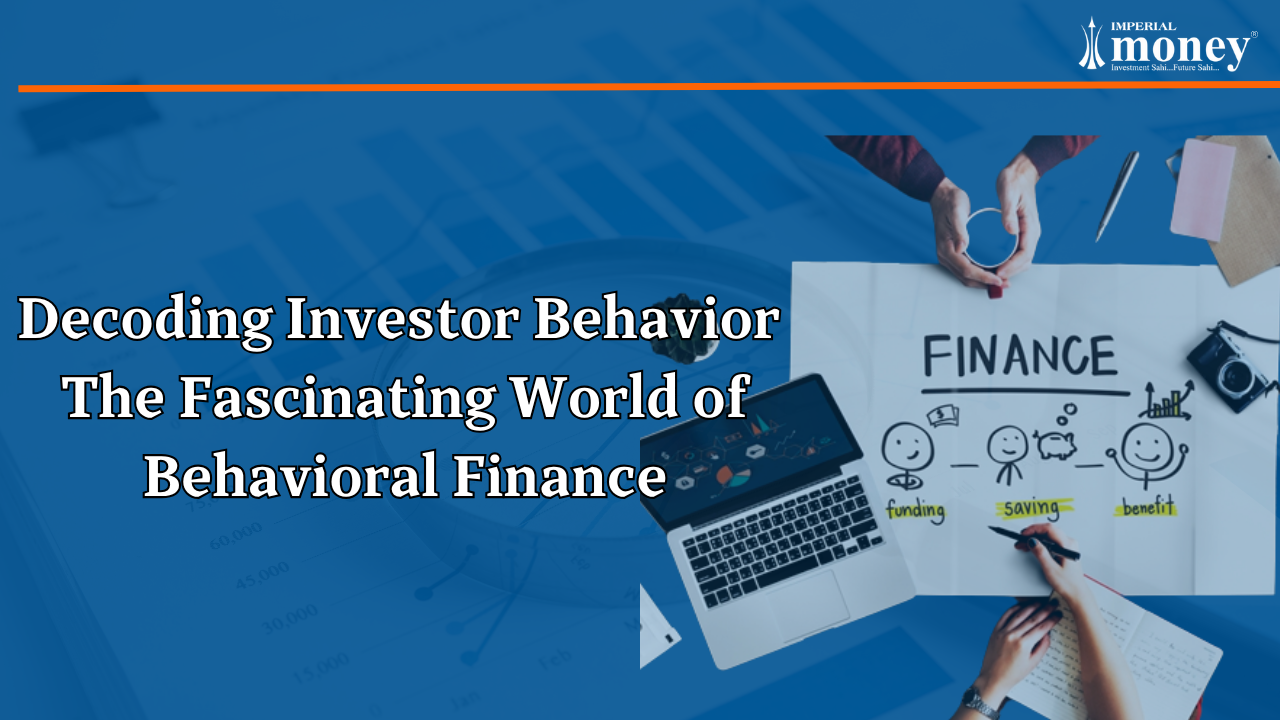
Decoding Investor Behavior: The Fascinating World of Behavioral Finance

In the realm of finance, numbers and logic are often assumed to be the guiding principles. However, human psychology plays an equally powerful role. Enter the intriguing field of behavioral finance, which explores the psychological drivers behind financial decision-making, where human emotions and cognitive biases frequently shape our financial choices.-

1. The Irrational Investor

Traditional finance theory assumes that investors are completely rational beings acting in their own best interest. However, behavioral finance challenges this by highlighting how emotions and cognitive biases lead us astray:

  • Overconfidence Bias: Many investors believe they possess superior financial acumen, leading to excessive trading, higher transaction costs, and an overestimation of returns.
  • Loss Aversion: People feel the psychological pain of losses far more intensely than the pleasure of equivalent gains, often causing them to hold onto losing investments for too long, hoping for a break-even point.
  • Herding Behavior: Humans are social creatures who often follow the crowd, piling into hyped assets even when fundamentals point toward a downturn.
  • Confirmation Bias:  Investors naturally seek out information that validates their existing beliefs while ignoring critical contradictory evidence.
  • Anchoring:  Fixating on specific arbitrary metrics or entry prices influences flawed buying and selling decisions, resulting in missed opportunities or excessive risk.

2. Behavioral Finance in Action

Behavioral biases heavily influence real-world economic events and market cycles:

  •  Market Bubbles and Crashes: Historical market extremes are driven largely by collective waves of euphoria, greed, and panic.
  •  Speculative Trading Frenzies: The rise of digital trading platforms and retail trading waves showcases how overconfidence and herd mentality fuel extreme volatility.
  •  Swinging Investor Sentiment: Markets frequently oscillate between extreme optimism (bull markets) and paralyzing pessimism (bear markets).

3.Managing Behavioral Biases

While humans cannot completely eliminate innate psychological tendencies, disciplined strategies help mitigate their impact:

  •  Self-Awareness: Recognize your emotional triggers and personal biases before executing trades.
  •  Continuous Education: Stay informed about behavioral patterns to maintain objective clarity.
  •  Strict Diversification: Spreading capital across asset classes insulates portfolios from emotional overexposure.
  •  Long-Term Perspective: Focus rigidly on overarching financial goals to avoid impulsive reactions to short-term market noise.

Conclusion

Behavioral finance unveils the intricate relationship between human psychology and financial markets. By acknowledging our biases and building structural safeguards—such as automated SIPs and professional guidance—we can become more disciplined and rational investors. Wealth building is as much about mastering your own mind as it is about crunching numbers.

Note: Mutual Fund investments are subject to market risks; read all scheme-related documents carefully.

Investing is Now Just a Few Clicks Away with Imperial Money App

Everything is just a few clicks away these days! Since digitalization transformed our country, it has changed how things work, especially in the business world. Business is no longer limited to physical entities. The internet has created a virtual world where organizations build strong relationships with customers.

A decade ago, smartphones triggered a digital revolution and popularized mobile applications. Irrespective of whether it’s a service or a product, digital platforms are among the best ways to connect with users—especially when they cut out the friction of traveling to get things done.

Imperial Money Private Limited is a dedicated financial firm offering mutual funds, insurance, tax savings, NRI services, wealth creation, and more. In this competitive digital world, Imperial Money maintains a strong presence through mobile applications designed to reach and guide clients seamlessly.

1. The Rise of Digital Investing & Financial Awareness

In recent times, shifting global routines accelerated the use of online applications to keep operations running smoothly. Simultaneously, financial awareness surged across India. With greater stability in many households, people now possess financial resources and are ready to take calculated risks to grow their wealth through investments rather than traditional savings alone.

The Imperial Money investment app is compatible with both Android and iOS users, available on the Google Play Store and the Apple App Store. Clients can access various financial services, with mutual funds taking center stage.

2. What You Can Do Through the App:

  • Quick Sign-Up: Complete registration in minutes.
  • In-App KYC: Streamlined, paperless KYC process.
  •  Fund Management: Buy, sell, or shift mutual funds within fund families seamlessly.
  •  Systematic Plans: Easily set up a SIP (Systematic Investment Plan), STP, or SWP.
  •  Zero-Commission Investing: Invest in mutual funds online for free.
  •  Expert-Curated Baskets: Access researched, ready-made portfolios designed by experienced professionals.
  •  Finance News & Insights: Stay updated with real-time notifications and market updates.

    The platform includes tutorials allowing users to start investing with as little as ₹500 to match their life objectives, supported by an expert team ready to assist with any questions.

3.Simplify Your Portfolio Management

Do you find managing multiple credentials difficult?Access your investments across multiple mutual funds through a single gateway. No more juggling multiple PINs, folio numbers, or login IDs.

  • Secure Mobile Logins: Simplify your login using a mobile PIN, pattern, or password.
  • Paperless Investing: Quick account creation with instant activation.
  •  Instant SIP: Once registered, starting a SIP takes less than a minute.
  • Financial Calculators: Use built-in SIP calculators to plan for your long-term goals.

4. First-Time User Guide

If you are new to the app, follow this simple installation workflow:

  •  Verify your KYC: (If KYC is not already registered, complete the PAN/KYC verification process).
  •  Profile Setup: Enter your personal and financial preferences.
  • Start Investing: Choose between a SIP or a lump-sum investment based on AMFI guidelines.

5. Is Your Data Secure?

Imperial Money uses robust security standards to protect user data and privacy. The application is secure and stores no sensitive information directly on your device or SIM card. Furthermore, Imperial Money follows a transparent, zero-commission model for mutual fund investments, ensuring a safe and comfortable environment to grow your wealth.

With all these facilities available right from your home, the right moment to start investing is NOW! 

HAPPY INVESTING!


Market Timing or Valuation Management: Should You Time the Market or Stay In It for the Long Term?

When it comes to investing in the stock market, one of the most debated topics is whether to engage in market timing or adhere to disciplined valuation and long-term asset management. Both approaches have proponents and critics, and understanding their dynamics can significantly impact your financial success. In this article, we delve into the concepts of market timing, valuation management, and the middle ground to help you make informed decisions.

1. Market Timing: The Temptation of Precision

Market timing is the practice of attempting to predict future market movements to buy low and sell high based on short-term fluctuations. While appealing in theory, it is laden with extreme challenges and risks.

a.) Pros of Market Timing: 

  • Profit Potential: Successfully timing the market can yield short-term gains if you consistently hit the exact inflection points.
  • Risk Mitigation: Proponents attempt to sidestep major market corrections by stepping out of equities entirely.

b.) Cons of Market Timing:

  •  Extreme Difficulty: Accurately predicting market movements consistently is virtually impossible, even for seasoned professionals.
  •  Missed Opportunities: Missing just a handful of the market’s best-performing trading days can severely cripple long-term returns.
  • Emotional Stress: Constantly reacting to market noise breeds panic, anxiety, and impulsive decision-making.

2. Valuation Management: The Power of Patience

In contrast, a long-term valuation-focused strategy centers on asset allocation and staying invested through economic cycles. This approach relies on the historical upward trajectory of equities and the compounding effect.

a.) Pros of Valuation Management:

  • Historical Evidence: Long-term data proves that markets trend upward over extended horizons, rewarding patient investors.
  • Simplicity and Reduced Stress: Eliminates the need for daily monitoring and reactive trading.
  • Compounding Wealth: Time in the market allows earnings to generate additional earnings exponentially.

b.) Cons of Valuation Management:

  • Patience Required: Sticking to a long-term plan requires immense discipline, especially during severe corrections.
  • Weathering Volatility: Investors must learn to endure market downturns without panic-selling.

3.The Middle Ground: Rupee-Cost Averaging (RCA)

For many retail investors, rupee-cost averaging (RCA) via Systematic Investment Plans (SIPs) offers the ultimate balanced solution. By investing fixed amounts at regular intervals regardless of market conditions, you automatically purchase more units when prices are low and fewer when markets are frothy, neutralizing volatility.

Conclusion

Valuation is king: when markets are frothy, tighten your belt; when valuations are compelling, dive in deep. While precise market timing is a myth, tracking valuations provides vital guidelines for dynamic asset allocation. 

Navigating market valuations and active portfolio management requires expert insight. For over 12 years, professional, scientific, and process-driven strategies—putting client interests first—have consistently generated an alpha of 5% to 7% year-on-year (YoY) over benchmark indices. Connect with our experts to structure your portfolio correctly.

Note: Mutual Fund investments are subject to market risks, read all scheme-related documents carefully.