
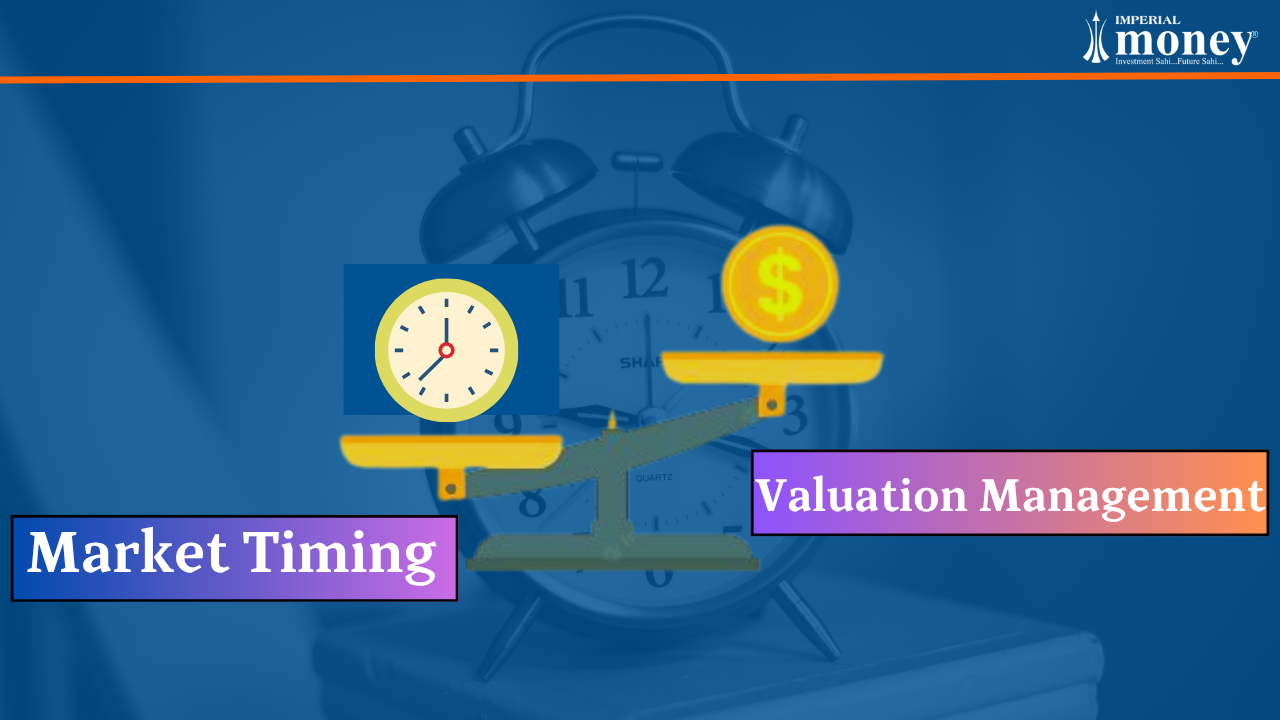
When it comes to investing in the stock market, one of the most debated topics is whether to engage in market timing or adhere to disciplined valuation and long-term asset management. Both approaches have proponents and critics, and understanding their dynamics can significantly impact your financial success. In this article, we delve into the concepts of market timing, valuation management, and the middle ground to help you make informed decisions.
1. Market Timing: The Temptation of Precision
Market timing is the practice of attempting to predict future market movements to buy low and sell high based on short-term fluctuations. While appealing in theory, it is laden with extreme challenges and risks.
a.) Pros of Market Timing:
- Profit Potential: Successfully timing the market can yield short-term gains if you consistently hit the exact inflection points.
- Risk Mitigation: Proponents attempt to sidestep major market corrections by stepping out of equities entirely.
b.) Cons of Market Timing:
- Extreme Difficulty: Accurately predicting market movements consistently is virtually impossible, even for seasoned professionals.
- Missed Opportunities: Missing just a handful of the market’s best-performing trading days can severely cripple long-term returns.
- Emotional Stress: Constantly reacting to market noise breeds panic, anxiety, and impulsive decision-making.
2. Valuation Management: The Power of Patience
In contrast, a long-term valuation-focused strategy centers on asset allocation and staying invested through economic cycles. This approach relies on the historical upward trajectory of equities and the compounding effect.
a.) Pros of Valuation Management:
- Historical Evidence: Long-term data proves that markets trend upward over extended horizons, rewarding patient investors.
- Simplicity and Reduced Stress: Eliminates the need for daily monitoring and reactive trading.
- Compounding Wealth: Time in the market allows earnings to generate additional earnings exponentially.
b.) Cons of Valuation Management:
- Patience Required: Sticking to a long-term plan requires immense discipline, especially during severe corrections.
- Weathering Volatility: Investors must learn to endure market downturns without panic-selling.
3.The Middle Ground: Rupee-Cost Averaging (RCA)
For many retail investors, rupee-cost averaging (RCA) via Systematic Investment Plans (SIPs) offers the ultimate balanced solution. By investing fixed amounts at regular intervals regardless of market conditions, you automatically purchase more units when prices are low and fewer when markets are frothy, neutralizing volatility.
Conclusion
Valuation is king: when markets are frothy, tighten your belt; when valuations are compelling, dive in deep. While precise market timing is a myth, tracking valuations provides vital guidelines for dynamic asset allocation.
Navigating market valuations and active portfolio management requires expert insight. For over 12 years, professional, scientific, and process-driven strategies—putting client interests first—have consistently generated an alpha of 5% to 7% year-on-year (YoY) over benchmark indices. Connect with our experts to structure your portfolio correctly.
Note: Mutual Fund investments are subject to market risks, read all scheme-related documents carefully.
